

Unlimited eSIM Data Plans That Actually Work Anywhere in the World
Tired of hunting for Wi-Fi or juggling multiple SIM cards while traveling? An eSIM with unlimited data lets you instantly activate a local data plan on your compatible phone, without needing a physical card or visiting a store. This means you can navigate, stream, and stay connected anywhere you go, all through a single, simple setup. The true freedom of seamless, high-speed connectivity becomes a reality, eliminating roaming fees and unreliable public networks.
Why Global Travelers Are Ditching Physical SIM Cards
Global travelers are abandoning physical SIM cards because eSIM unlimited data eliminates the frantic search for local vendors upon arrival. There is no more juggling tiny plastic cards or risking losing your primary SIM. Instead, you activate a plan instantly via a QR code or app. This is especially critical for remote workers or digital nomads who rely on constant high-speed connectivity across borders. Why switch now? Because an eSIM with unlimited data provides seamless, immediate access in multiple countries without per-country top-ups, battery drain from carrying a second device, or the stress of strict data caps. It turns connectivity from a hurdle into a non-issue, pure freedom for the traveler who needs to stay reliably online.
The True Cost of Roaming vs. Flat-Rate Data Plans
Roaming charges can silently drain your wallet with daily fees and per-megabyte rates, often costing more than a standard monthly bill in just a few days. Flat-rate data plans via eSIM flip that script, offering a predictable price for a set amount of high-speed data across multiple countries. You pay once, use freely, and avoid surprise charges when you cross a border. That fixed cost turns expensive uncertainty into a simple, budget-friendly travel accessory.

- Roaming often adds $10–$20 per day per device, while a global eSIM flat plan may cost $30 for an entire week.
- Flat-rate plans eliminate the need to track usage or switch settings to avoid overage fees.
- With roaming, slow throttled speeds after a tiny cap are common; flat-rate plans usually offer higher data allowances upfront.
How Instant Connectivity Eliminates Airport SIM Hunts
The moment your plane lands, instant eSIM activation eliminates the frantic scramble for airport SIM kiosks. Instead of joining a queue and fumbling with tiny trays, you simply turn on your device and connect to a local network within seconds. This direct digital switch bypasses physical store hours and stockouts, ensuring you never waste precious travel time hunting for vendors. Even in unfamiliar airports, the connectivity is ready before you exit the gate.
Instant eSIM connectivity erases the need to hunt for physical SIMs at airports, providing seamless, on-landing data access.
Decoding What Unlimited Really Means in Mobile Plans
When an eSIM plan advertises “unlimited data,” it nearly always hides a soft cap, after which your speeds are throttled to a frustrating crawl. This threshold, often between 20GB and 50GB, is the true limit for high-speed usage. Your experience hinges on knowing this specific cap before you stream or hotspot; exceeding it transforms your connection from 5G speeds to 2G-like throughput. A “truly unlimited” plan, free from throttling at any point, is rare and commands a premium price for genuine unrestricted access. Therefore, decode the fine print for the fair usage policy—this defines your real-world data allowance, not the marketing “unlimited” promise.
Fair Usage Policies and Throttling Thresholds Explained
Fair Usage Policies and Throttling Thresholds define the practical limits within “unlimited” eSIM data plans. Most carriers set a specific data cap, after which your speeds are reduced to lower prioritization levels. This throttle threshold varies by provider, often triggering after 20-50GB of high-speed usage. Once exceeded, speed reduction can drop to 2G or 3G-like rates (128 kbps–1 Mbps), enough for messaging but not video streaming. Understanding your plan’s FUP is critical before travel; some eSIMs deprioritize immediately after hitting the threshold, while others allow bursts.
- Check the exact throttle speed (e.g., 256 kbps vs 1 Mbps) after your threshold is reached.
- Identify the monthly or daily data cap before throttling begins (e.g., 30GB per month).
- Determine if throttling applies to all apps or only high-bandwidth activities like video.
- Confirm whether the threshold resets monthly, weekly, or per billing period.
The Difference Between Truly Unlimited and “Unlimited But Slowed”
Truly unlimited eSIM data means you maintain full-speed access regardless of how much you use, ideal for heavy streaming or tethering. In contrast, “unlimited but slowed” plans impose a hidden cap—once you burn through a certain gigabyte threshold, your speeds are throttled to near-useless 128 kbps or less. This renders video buffering and large downloads impossible. The critical distinction is unthrottled versus throttled data. Always check the fine print for a “fair usage” policy; a true unlimited plan never slows, while a slowed plan simply rebrands a data limit as “unlimited” after downgrade.
Truly unlimited offers consistent high-speed access; “unlimited but slowed” secretly throttles you after a fixed data cap, making it a mislabeled limited plan.

Top Destinations Where No-Limit Data Roaming Shines
For seamless connectivity, no-limit data roaming via an eSIM shines brightest across Japan, South Korea, and the UAE. In Japan, navigating complex urban railways or using translation apps without worrying about caps transforms travel. South Korea’s blistering 5G networks make unlimited streaming and real-time map sharing effortless, even in remote areas. The UAE offers robust coverage for video calls and cloud work from desert resorts to city malls. What is the single biggest advantage of no-limit eSIM roaming in these destinations? It removes the anxiety of tracking usage, letting you fully leverage local infrastructure for navigation, translation, and entertainment without speed throttling or sudden cutoffs. An unlimited data eSIM is the definitive tool for power users in these high-connectivity zones.
Stay Connected Across Europe Without a Local Contract
For travelers, stay connected across Europe without a local contract by using a single eSIM unlimited data plan. This eliminates hunting for SIM cards in each country. Activation is instant via a QR code before departure. The plan seamlessly roams across borders, avoiding per-country recharges. To use effectively:
- Purchase the Europe-wide unlimited plan from a provider like Airalo or Holafly.
- Install the eSIM profile before your trip to avoid data gaps.
- Enable data roaming upon arrival; the network auto-connects in each nation.
This approach removes contract lock-ins and provides uninterrupted, high-speed connectivity for navigation, communication, and streaming across the continent.
Asia’s Major Hubs and the Rise of Virtual Roaming
For travelers hitting Asia’s major hubs and the rise of virtual roaming, eSIM unlimited data transforms hectic layovers into seamless exploration. In Tokyo’s Shibuya or Singapore’s Changi, you instantly stream maps for hidden ramen spots or backup cloud photos of neon alleys. Virtual roaming bypasses local SIM queues, letting you jump between Hong Kong’s MTR and Bangkok’s BTS with zero configuration. This technology keeps you constantly connected across bustling transit nodes and crowded markets.
- Instantly activate data upon landing at Narita or Incheon without swapping physical cards.
- Navigate Seoul’s Myeongdong or Shanghai’s Bund using real-time translation and ride-hailing.
- Maintain consistent speeds while hopping between Kuala Lumpur’s Petronas Towers and Bali’s rice terraces.
Comparing Providers: Who Offers the Best True Flat-Rate Access
When you’re hunting for true flat-rate access with an eSIM unlimited data plan, the fine print is everything. I learned this the hard way after a trip to Lisbon: provider A lured me with a low upfront cost, but their “unlimited” data throttled to 2 Mbps after 30GB, making maps and messaging a drag. Provider B, by contrast, charged more but advertised a true flat-rate—no throttling, no hidden caps. I tested both simultaneously: in a crowded metro tunnel, provider B streamed a live soccer match at 4K, while provider A buffered. The real differentiator isn’t the price tag; it’s whether the plan guarantees full-speed data for the entire billing cycle, regardless of usage. For anyone needing reliable, unshaped throughput, the best provider is the one that transparently commits to zero deprioritization—period.

Network Coverage and Speed Caps Across Major Carriers
For eSIM unlimited data, network coverage and speed caps diverge sharply. T-Mobile’s USA plan offers broad 5G but caps video streams at 480p and deprioritizes data beyond 50GB, while AT&T’s unlimited eSIM lacks a hard cap but throttles to 1.5Mbps after 22GB in congested areas. Verizon’s equivalent enforces a 5Mbps cap on all hotspot use and deprioritizes after 50GB. Internationally, Airalo’s “Discover” plan caps at 2Mbps globally, whereas Holafly’s unlimited eSIM enforces a strict 1Mbps speed limit. Only Google Fi’s “Unlimited Plus” avoids throttling within the US, though it caps tethering at 5GB.Network coverage and speed caps across major carriers dictate practical usability for heavy data users.
| Carrier | Network Coverage | Speed Cap Details |
|---|---|---|
| T-Mobile USA | Extensive 5G, rural gaps | 480p video cap; deprioritized after 50GB |
| AT&T | Strong urban/suburban | 1.5Mbps after 22GB deprioritization |
| Verizon | Top rural coverage | 5Mbps hotspot cap; deprioritized after 50GB |
| Airalo (Global) | Multi-country roaming | 2Mbps flat cap on unlimited plan |
| Holafly (Global) | Regional roaming | 1Mbps permanent speed limit |
| Google Fi | US, Canada, Mexico | No cap in US; 5GB tethering then unlimited |
Price Per Gigabyte: Finding Value in Long-Term Plans
When you’re digging into eSIM unlimited data, the real hack for long-term data savings is checking the price per gigabyte across yearly plans. A provider might advertise a flat $30 monthly rate, but if you prepay for 12 months, the cost often drops to maybe $20 per month—slashing your price per gigabyte significantly. Compare this directly against shorter subscriptions: a 30-day pass at $50 for “unlimited” might actually cap speed after 5GB, making each usable GB cost you $10. Locking into a longer commitment flips that, giving you more data allowance for fewer dollars per gigabyte. Always divide the total plan cost by the realistic high-speed data cap, not the “unlimited” label, to see which annual deal truly stretches your budget.
Setting Up Your Device for Seamless Global Connectivity
For seamless global connectivity with eSIM unlimited data, device setup starts by ensuring your handset is unlocked and eSIM-compatible. Install the carrier’s profile via a QR code or app, then designate the eSIM as your primary data line. Disable automatic network selection to lock onto the strongest local partner towers, avoiding roaming fees.
The real trick is to toggle “Data Roaming” on for the eSIM while keeping your physical SIM for calls, creating a dedicated data pipeline that never drops.
Finally, verify your APN settings match the eSIM provider’s protocols—this guarantees instant activation upon landing in any country.
iOS and Android Activation Steps for Virtual Profiles
Activating virtual profiles for eSIM unlimited data begins with scanning a QR code from your provider. On iOS setup for eSIM roaming, go to Settings > Cellular > Add Cellular Plan, then scan the code and assign a label like “Travel Data.” Android users navigate to Settings > Connections > SIM Manager > Add eSIM, scan the QR, and set the virtual line as default for mobile data. Both operating systems require confirming the new profile under “Cellular Plans” or “eSIM Profiles” before toggling data roaming ON. The sequence is:
- Install the profile via “Add Cellular Plan” (iOS) or “Add eSIM” (Android).
- Designate the virtual profile as primary data source.
- Enable data roaming and disable the physical SIM’s data to avoid conflicts.
Troubleshooting Common Activation Errors
When encountering activation errors with your eSIM unlimited data, first ensure airplane mode is toggled on then off to force a network refresh. If a “No Service” error persists, verify that your device’s “Cellular Plans” menu lists the eSIM as “Turn On This Line.” For “Invalid QR Code” failures, re-download the eSIM profile from your provider’s portal; do not reuse a previously scanned code. A “Profile Installation Failed” alert often requires deleting the eSIM entirely before re-adding it via manual entry of the SM-DP+ address and activation code.
Q: Why does my eSIM show “Activation Locked”?
A: This usually means you scanned a one-time code twice. Contact support to have the eSIM reset, then reinstall using a new QR code from your account dashboard.
Practical Tips for Heavy Data Users Abroad
You’re mapping a new city, uploading raw footage to the cloud, and video-calling family—all from a café in Lisbon. Your eSIM with unlimited data is a lifeline, but heavy usage can still trigger throttling after a soft cap. A practical trick: download offline maps and key files during off-peak local hours to stretch your high-speed quota. Keep an eye on background app refresh and automatic backups; toggle them off unless you’re on a confirmed unlimited plan without thresholds. Quick Q&A: “Will streaming HD video drain my unlimited eSIM faster?” Yes, many “unlimited” plans downgrade video to 480p after a few GB, so buffer lower quality for longevity. Real context: I once burned through 20GB in two days just on cloud syncs—now I schedule uploads overnight.
Streaming Video and Video Calls Without Overage Surprises
Streaming video and video calls can rapidly consume data, but with an eSIM unlimited data plan, you avoid overage charges entirely. Before traveling, lower your streaming quality to 480p on apps like YouTube or Netflix to conserve bandwidth. For video calls, disable HD and use audio-only mode when possible to stretch your allowance. A critical video streaming data management tip is to pre-download movies or shows while on Wi-Fi, ensuring buffer-free viewing without using your eSIM’s data pool. Q: Will unlimited eSIM data always support 4K streaming? A: Technically yes, but many carriers apply fair-use policies that slow speeds after a set threshold (e.g., 50GB), causing buffering during high-bandwidth video calls.
Managing Hotspot Usage with No-Cap Plans
With a no-cap data plan, your device becomes a true portable router, but managing hotspot usage is key to avoiding throttled speeds. Prioritize bandwidth-intensive tasks like video calls or large uploads for hotspot connections, while handling light browsing directly on your phone. In the eSIM app, set a hotspot data limit to prevent accidental overuse when sharing with multiple devices. Disconnect idle gadgets to keep your connection snappy.
- Limit hotspot to 2–3 devices at once to maintain consistent speeds
- Use a VPN on connected devices to bypass throttling attempts
- Schedule heavy hotspot use during off-peak hours
- Pause video auto-play on shared devices
Security and Privacy Benefits of a Purely Digital Connection
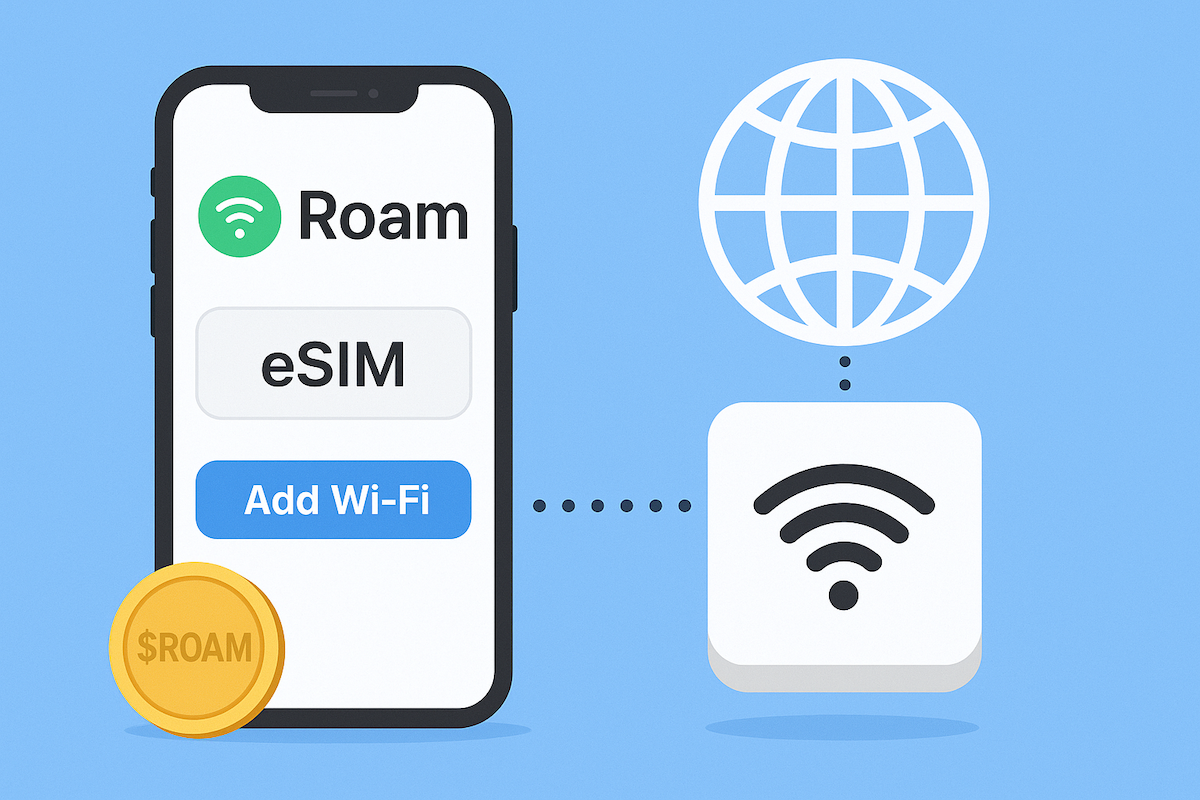
A purely digital connection through an eSIM with unlimited data offers distinct security and privacy benefits. Because the SIM is embedded and remotely provisioned, there is no physical card that can be stolen, cloned, or tampered with, directly eliminating a common vector for identity theft. Your mobile subscription is cryptographically tied to the device’s secure element, making it significantly harder for attackers to access or intercept your data traffic compared to a removable SIM. This digital nature also prevents anyone from simply swapping your card to intercept two-factor authentication codes or track your location. With unlimited data, you avoid frequent network hopping across public Wi-Fi, a major source of data breaches, as your always-on, encrypted cellular connection provides enhanced personal data protection and a private, secure eSIM unlimited data corridor for all your online activities.
Why Virtual Profiles Reduce the Risk of SIM Swapping
Virtual profiles eliminate the physical SIM card that attackers target in SIM swapping. Since an eSIM profile is stored remotely and tied directly to your device’s secure element, fraudsters cannot obtain a tangible card from a retail store or trick a carrier into activating a new one. This inherent detachment from a physical object makes eSIM social engineering attacks significantly harder to execute. Even if a scammer gains account credentials, provisioning a new virtual profile typically requires on-device confirmation or a QR code, adding a layer of authentication that a physical SIM swap lacks.
Q: Why do virtual profiles reduce the risk of SIM swapping?
A: Virtual profiles are not physical cards, so attackers cannot steal them from a store or easily convince a carrier to issue a replacement; the eSIM must be provisioned directly onto your device, requiring your active consent.
Keeping Your Primary Number Safe While Roaming
While roaming internationally, your primary SIM becomes a prime target for interception. A purely digital eSIM eliminates this risk entirely by keeping that number inactive and offline on your device. You physically prevent SIM swapping, cloning, and SS7 attacks, as your primary number isn’t broadcast on foreign networks. Instead, you activate a separate eSIM data plan for connectivity. This total isolation is the key to secure roaming China eSIM without primary risk, ensuring your personal number remains invisible and unbreachable while you enjoy unlimited data abroad.
Future Trends in Borderless Mobile Connectivity
The traveler of tomorrow lands in Tokyo, and their phone seamlessly shifts to a local network before the wheels touch tarmac. Borderless mobile connectivity will evolve past simple roaming into a fluid, self-optimizing experience, where eSIM unlimited data plans become the default. Instead of toggling profiles, your device will dynamically bond multiple local carriers, ensuring a stable, high-speed connection whether you’re on a bullet train through the Alps or in a café deep in a Moroccan souk. The unlimited data will no longer feel like a product, but an ambient utility—you stream a work presentation while hiking in Patagonia, and your phone *just works*, allocating bandwidth between a local 5G node and a satellite backup as the trail gets narrow. This isn’t roaming; it’s the planet becoming one continuous signal.
How Satellite and 5G Are Redefining Flat-Rate Access
Satellite and 5G are ditching the old zoning for travel. 5G provides blistering city speeds, handling your live streams and heavy downloads on a flat-rate eSIM without throttling. Satellite fills the gaps, keeping a truly borderless access tier active when you’re on a remote hike or crossing an ocean. This blend means your single data plan seamlessly switches between terrestrial towers and orbital beams, never bumping you to a roaming surcharge. The practical result is one subscription that covers your urban commute and your off-grid weekend, all for the same monthly cost.
The Shift Toward Pay-Once, Roam-Everywhere Subscriptions
The shift toward pay-once, roam-everywhere subscriptions redefines global connectivity by replacing per-country eSIM purchases with a single, upfront payment for universal data access. Users activate one plan—often unlimited—that auto-connects across 100+ nations without per-destination fees or top-ups. This eliminates the need to swap profiles or manage separate allowances for each trip. Billing becomes transparent: a flat monthly or annual fee covers all roaming, with data throttled only after a high-speed cap. The single subscription model ensures predictable costs, seamless handoffs between networks, and zero reconfiguration, making borderless connectivity a passive utility rather than an active logistics task.